Indigo dyeing in Kyoto

Three workshops, all using natural fermented indigo rather than synthetic dye. A dye house in western Kyoto runs a two-hour class for up to six. A dyer in Oharano, on the city's southwestern edge, teaches with indigo he grows himself. In Ohara, in the northern hills, a master dyer gives private sessions. Prices run from €84 to ¥46,935 per person.

Prices checked 11 Nov 2026, in the currency each site showed; Wabunka prices are in yen, the currency it charges in · Some links may earn us a commission

Some booking links may pay us a commission. You pay the same price either way. Details.

The short version

Side by side

Cheapest on the left, as listed. Scroll sideways on a phone.
Small groupKonya indigo studio
PrivateRiku Matsuzaki, Kyoto indigo
PrivateKobo Ainoyakata (Toru Shimomura)
Price per person
From €84
From ¥30,500
From ¥46,935
Length
2 hours, with a studio tour and tea (1.5 to 2 hours elsewhere in the listing)
About 3 hours
150 minutes: a talk on indigo, then a studio tour and hands-on dyeing
Group size
Shared class, up to 6
Not stated. Tradi books at least two guests; a solo guest pays for two.
Your party only, 1 to 5. Priced for at least 2; a solo guest pays the two-person minimum.
Where
Umezu, Ukyo Ward (western Kyoto)
Oharano, Nishikyo Ward (southwest Kyoto)
Ohara, Sakyo Ward (northern Kyoto)
What you dye, as listed
Fold and bind a handkerchief or tenugui, then dip it in a natural fermented (sukumo) indigo vat. The list of inclusions says a furoshiki cloth instead.
A stole in cotton, silk, bamboo fiber or cashmere, dipped again and again in a natural vat of sukumo and wood-ash lye, using indigo the dyer grows himself.
An organic cotton stole, folded and clamped between boards to make a pattern, then dipped in a natural lye-fermented sukumo vat. A wall tapestry instead costs extra.
You take home
Your dyed cloth, same day, and a small souvenir
The stole, same day
The stole, same day, still damp
Color care
Not stated
The listing says the natural vat gives a colorfast finish that doesn't bleed. No washing advice.
Handed over damp; dry it fully before use. The listing says washing gradually clears excess dye. No other care advice.
English
Bilingual host; taught in English and Japanese
Not stated. Tradi says an interpreter is an add-on unless the listing includes one; this one doesn't.
English-speaking guide included
Free cancellation
Up to 24 hours before (48 hours on Klook)
Free until confirmed. After that, 5% from 8 days before, 30% from 2 to 7 days, 50% the day before, 100% on the day.
Up to 15 days before
Reviews
5.0 from 69 on GetYourGuide.
None shown
12 on Wabunka. No star score shown.

Before you book

Ohara and Oharano are different places. Ohara is in the hills north of the city, about 40 minutes by train and bus from Kyoto Station. Oharano is on the southwestern edge. Two of the studios here are in one or the other, so check which before you plan the day.

The cheapest class has three prices. The Konya class was from €84 on GetYourGuide, from €96.88 on Viator and US$127.89 on Klook when we checked. GetYourGuide lets you cancel up to 24 hours before; Klook asks for 48.

The headline price is rarely the whole price. At Konya a scarf or stole instead of the handkerchief costs extra, paid on the day, with no prices listed. Riku Matsuzaki's fabric is charged on top of the base price, and an interpreter may be extra too. Neither listing says how much.

Solo travelers pay for two at the private sessions. Wabunka charges a two-person minimum for the Ohara session, and Tradi books at least two guests. Only the Konya class is priced for one.

Natural indigo is a living vat. The Ohara listing warns that a session can be cancelled the day before if the indigo isn't ready, and that the color may come out lighter than expected. The stole is handed over still damp, so bring a bag for it.

The three workshops

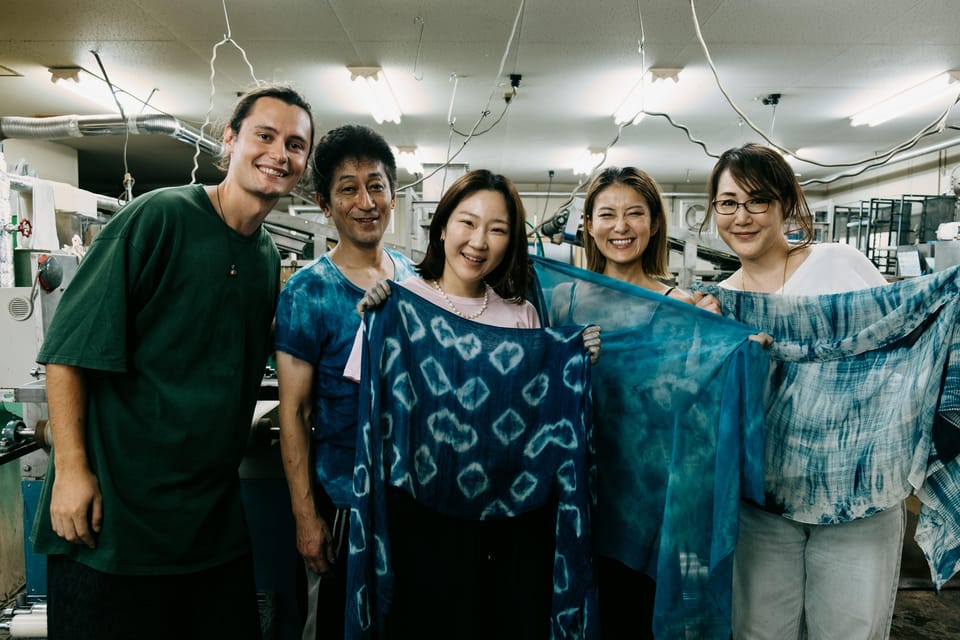
A group holds up freshly dyed indigo cloths with white circle patterns Photo: GetYourGuide
No. 004-1Small group

Konya indigo studio

2 hours · Up to 6 · Umezu, Ukyo Ward · Listed on GetYourGuide as "Kyoto Natural Indigo Dyeing with Local Masters"

A class at Konya, a dye house the listing says has worked with natural indigo for over 300 years. It sits in a quiet part of western Kyoto, about 30 minutes from Kyoto Station by train and on foot. You tour the vats, fold and bind your cloth, dip it in fermented sukumo indigo and watch it turn from green to blue as it meets the air, then finish with indigo leaf tea. The base price covers a handkerchief or tenugui; a cotton scarf, silk scarf or wool stole costs extra, paid on the day, and the listing names no prices for them. The list of inclusions says the item is a cotton furoshiki, which doesn't match. The same class is on Viator from €96.88 and on Klook at US$127.89, where it has no reviews yet.

Reviewers liked: A welcoming team, clear step-by-step teaching and a real working studio rather than a classroom. Reviewers liked hearing the history of indigo, and several mentioned seeing fabric for kimono being dyed and ending with tea and sweets.

Reviewers didn't: Some reviewers said directions and transport advice for reaching the studio could be clearer.

Summarized from reviews on GetYourGuide (5.0 from 69).

Pick it if you want natural indigo at a working dye house for the lowest price here, with the option to cancel the day before.

Skip it if you want a larger piece or a private session. Upgrades cost extra and the class is shared with up to five others.
From €84 per person · checked 11 Nov 2026 See on GetYourGuide
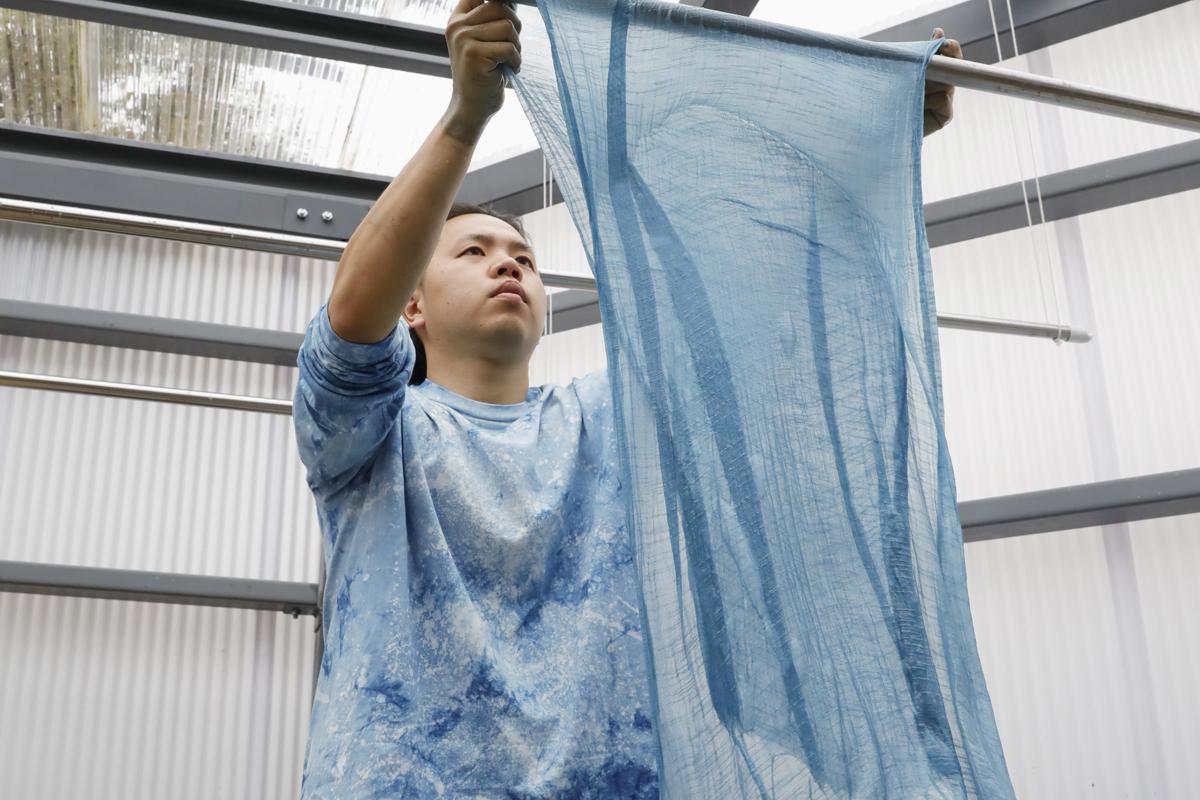
A man hangs a long piece of indigo-dyed cloth to dry Photo: Tradi
No. 004-2Private

Riku Matsuzaki, Kyoto indigo

About 3 hours · Oharano, Nishikyo Ward · Booked by request through Tradi · Stole fabric costs extra

Riku Matsuzaki is a self-taught dyer who grows his own indigo and has revived a Kyoto strain that the listing says died out in the Taisho era (1912 to 1926). His vat uses only sukumo, composted indigo leaves, and lye made from wood ash. After a talk on the difference between natural and chemical indigo, you choose a stole and build up the depth of blue yourself by dipping, airing and rinsing it. The ¥30,500 is the base price only: the fabric is charged on top and the listing doesn't say how much, so silk or cashmere will cost more. Tradi takes requests rather than instant bookings, needs two days' notice and replies within 24 hours. Its general terms say the artisans speak Japanese and that an interpreter is an extra unless included; this listing doesn't mention one. The studio is in Oharano, on the city's southwestern edge, which the listing puts at 6 minutes by train and 15 minutes by taxi from Kyoto Station. Not to be confused with Ohara in the north.

Reviewers liked: Not stated. The listing showed no reviews when we checked.

Reviewers didn't: Not stated.

No review summary. Tradi showed no reviews for this session.

Pick it if you want a longer session with a dyer who grows his own indigo, and you can work out the interpreter and fabric costs before you book.

Skip it if you want the full price up front or reviews to go on. Fabric and any interpreter are extra, and there are no reviews.

From ¥30,500 per person · checked 11 Nov 2026 See on Tradi
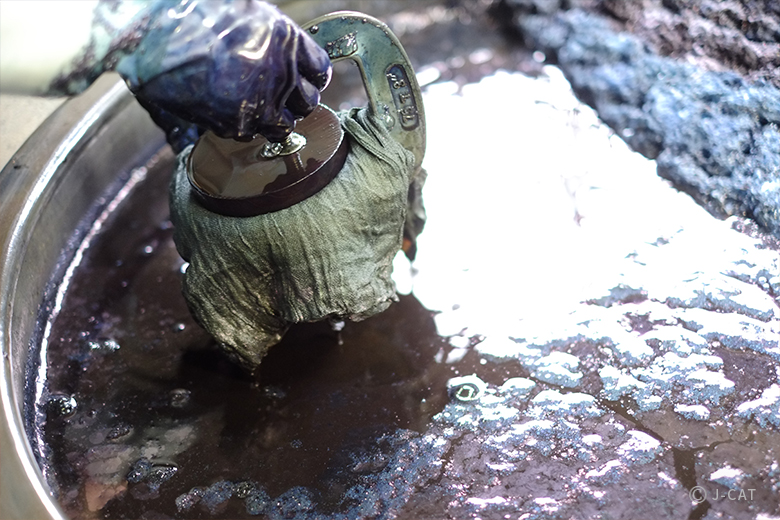
A gloved hand lowering a clamped bundle of cloth into a dark indigo vat with a frothy surface Photo: Wabunka
No. 004-3Private

Kobo Ainoyakata (Toru Shimomura)

150 minutes · Private, 1 to 5 · Ohara, Sakyo Ward · English-speaking guide · One group a day

A private session with Toru Shimomura, a working dyer whose studio sits on a hillside in Ohara, about 40 minutes by train and bus north of Kyoto Station. He keeps a vat of sukumo fermented with wood-ash lye, a slow method the listing says very few dyers still use. After a talk on the history and chemistry of indigo, you fold an organic cotton stole, clamp it between boards and dip it several times. It is the longest and most expensive session here. The studio takes one group a day, closes the dates either side of each booking to rest the vat, and opens dates a month at a time. Book at least three days ahead. The listing is frank about the risks of a live vat: the session can be cancelled as late as the day before if the indigo isn't right, and the color may come out lighter than you expect. You need to squat and stand often; wear clothes you don't mind staining, no perfume and no jewelry.

Reviewers liked: A patient master dyer who explains clearly, a good interpreter, and an unhurried private pace. Reviewers valued working in his own studio with his own materials rather than a showroom.

Reviewers didn't: One reviewer called it expensive and a long way out, though worth both.

Summarized from reviews on Wabunka (12 reviews, no star rating shown).

Pick it if you want a private, unhurried session with a master dyer, an interpreter included, and a day out in the hills.

Skip it if you are short of time or traveling alone. It's a trip from the city, and one person pays for two.

From ¥46,935 per person · checked 11 Nov 2026 See on Wabunka