Indigo dyeing in Tokyo

Five places to dye cloth in indigo. Three are in or near Asakusa, one is under the railway arches near Yurakucho, and one is a natural-indigo studio in Ome, on Tokyo's western edge. Four are booked with the studio directly. Prices run from 2,200 yen for a handkerchief to 17,000 yen a person for a private lesson.

Prices checked 11 Nov 2026, in the currency each site showed; studio prices are in yen · Some links may earn us a commission

Some booking links may pay us a commission. You pay the same price either way. Details.

The short version

Side by side

Cheapest on the left, as listed. Scroll sideways on a phone.
Small groupKosoen
Group classWanariya
Group classMizuno Dye Factory, Hibiya OKUROJI
Small groupMaito Design Works studio
PrivateAikuma Shibori workshop
Price per person
From ¥2,200
From ¥2,500
From ¥4,400
From €68
From ¥17,000
Length
"A couple of hours" for a handkerchief, says the studio's site; its Asoview listing says about 1.5 hours of dyeing, 2 hours in all
60 minutes for most items, 90 minutes for T-shirts and stoles. The same page also says 75 minutes for a handkerchief.
60 to 90 minutes from arrival to finish on the English page; 30 to 60 minutes on the Japanese page. The dyeing itself is about 30 minutes, or 10 for the easy course.
1.5 hours
3 hours, morning or afternoon
Group size
Not stated on the studio's site. Its Asoview listing takes 1 to 9 people per booking.
Shared workshop with four vats. Online and phone bookings start at 2 people; groups of 40 to 50 can be taken.
Not stated
Up to 6
Your party only. Priced for 3 or more; 1 or 2 people pay 51,000 yen in total.
Where
Nagabuchi, Ome (western Tokyo, outside the 23 wards)
Senzoku, Taito (north of Senso-ji)
Uchisaiwaicho, Chiyoda (near Yurakucho and Shimbashi)
Misuji, Taito (near Kuramae and Shin-Okachimachi)
Kaminarimon, Taito (Asakusa)
What you dye, as listed
Simple shibori tie-dye on a handkerchief, bandana, cotton stole or T-shirt, or a small natural-fiber item you bring. Natural indigo fermented with lye (aku) in the studio's vats.
Shibori (squeeze) tie-dye on a handkerchief, tenugui towel, tote bag, T-shirt and more. The studio calls its dye natural indigo. Stencil and wax-resist dyeing are offered as separate classes.
Shibori tie-dye or plain and gradient dipping on a tenugui towel (sekka snowflake shibori), T-shirt, stole, sweatshirt or hoodie, or cotton, linen, silk or rayon you bring. Natural or synthetic indigo: not stated.
Shibori tie-dye and gradient dyeing on a scarf (two types), a furoshiki wrapping cloth or a T-shirt. The listing says natural fermented indigo vats.
Learn three shibori methods (mokume, karage and makiage), draw your design, bind the cloth, then dye it in an indigo vat. Natural or synthetic indigo: not stated.
You take home
Your piece, same day
Your piece, same day, in a free bag
Your piece, same day, spun dry
Your piece, same day. T-shirts may still be slightly damp; plastic bags are provided.
A shibori handkerchief
Color care
Rinse it lightly at the studio, then soak it in water overnight at home and dry it in the sun before use (Asoview listing). The studio says natural lye-fermented indigo is known for not fading easily.
The studio says any dyed cloth may bleed at first when washed, and that it fixes the color before handing your piece over.
The Japanese page says the cloth is rinsed until the water runs clear, soaked in acetic acid for about 5 minutes to set the color, then rinsed again. Home washing advice is not stated.
Not stated
Not stated
English
Not stated. The studio has an English website and takes bookings by email.
English-speaking staff always in the shop, the studio says
Not stated. The studio has an English booking page.
Instruction in English and Japanese
Interpreter included
Free cancellation
Not stated on the studio's site. On Asoview, 50% the day before and 100% on the day if you pay on site.
Not stated for ordinary bookings. Prepaid bookings: 50% from 30 to 11 days before, 80% from 10 days to 1 day before, 100% on the day, and no date changes.
Up to 24 hours before. Same-day cancellation is 3,000 yen per person, invoiced later; none for bad weather or disasters.
Up to 24 hours before
Not stated. The studio says its policy is given at booking, and that bookings for 1 or 2 people may be canceled.
Reviews
30 on Asoview (Japanese site). No star score shown.
None shown
None shown
5.0 from 31 on GetYourGuide.
None shown
Before you book

Not every listing says what is in the vat. Kosoen, Wanariya and the Misuji studio say their indigo is natural. The Hibiya OKUROJI shop and Aikuma don't say either way. If it matters to you, ask before you book.

The price depends on what you dye. Every headline price here is for the smallest item, usually a handkerchief or towel. A T-shirt costs two to three times as much, and pieces you bring from home are priced by weight or after the studio has seen them.

Solo travelers should check first. Wanariya's booking form takes groups of two or more only. Aikuma charges one or two people 51,000 yen in total and says it may cancel bookings that small.

The same studio has more than one price. Kosoen's handkerchief class was 2,200 yen on its English site and from 2,750 yen on Asoview, a Japanese booking site, when we checked. A GetYourGuide van tour sells a Wanariya tenugui class as part of a half day from €90.

Many sessions are weekends only. The Hibiya OKUROJI shop and Kosoen run their sessions on Saturdays and Sundays (Kosoen also on holidays). Kosoen needs three days' notice and Aikuma three weeks'.

The five workshops

No. 004-1Small group

Kosoen

About 2 hours · Weekends and holidays, 10:00 or 13:00 · Ome, western Tokyo · Booked by phone or email with the studio

A working indigo studio in Ome, on Tokyo's western edge. It dyes with natural indigo fermented in lye, the slow traditional method, and the Asoview listing says it keeps eight vats and picks one each day by how well it is fermenting. You choose a pattern from samples, bind or fold your cloth, then dip it and let it oxidize until you like the color. It is the cheapest session on this page, and the only one outside the 23 wards: Ome is about 1 hour 20 minutes by local train from Shinjuku, and the studio is a 25-minute walk, 5-minute taxi or short bus ride from Ome station. Sessions run on weekends and holidays only, and you book at least 3 days ahead by phone or email. Prices on the studio's English page are 2,200 yen for a handkerchief, 2,750 yen for a bandana, 5,280 yen for a cotton stole and 6,600 yen for a T-shirt. The same handkerchief class is from 2,750 yen on Asoview, a Japanese-language booking site. The studio is closed on Tuesdays.

Reviewers liked: Careful teaching that beginners and children could follow, and staff who talk about where the dye comes from and how the color is built up. Several reviewers were struck that such a traditional workshop still exists inside Tokyo.

Reviewers didn't: One reviewer found the instructions vague and had to keep asking what to do next, and mentioned the awkward journey.

Summarized from the first 10 of 30 reviews on Asoview, all in Japanese.

Pick it if you want natural fermented indigo at the lowest price here and don't mind a half-day trip to Ome.

Skip it if you are short of time, can only go on a weekday, or need English instruction confirmed before you travel.

From ¥2,200 per person · checked 11 Nov 2026 See on the studio's site
No. 004-2Group class

Wanariya

1 to 1.5 hours · Groups of 2 or more · Senzoku, Asakusa area · Booked on the studio's own site

An indigo and weaving workshop on the north side of Asakusa, a 10-minute walk from Iriya station (Hibiya line) or Tsukuba Express Asakusa station. You choose an item and a binding pattern, tie or fold the cloth, and dip it in one of four vats. Prices include the item and tax: 2,500 yen for a handkerchief, 3,800 yen for a tenugui towel, 8,000 yen for a T-shirt and up to 18,000 yen for a dress shirt. Paying ahead online saves 100 to 500 yen, but those bookings carry steep cancellation fees and can't be moved. The booking form says reservations are accepted only for groups of 2 or more, so a solo traveler would need to ask first. The studio's own page gives two different times for the handkerchief, 60 and 75 minutes. GetYourGuide sells a private van tour that includes a tenugui class here, from €102 (shown at €90 when we checked).

Reviewers liked: Not stated. The studio's site shows no reviews.

Reviewers didn't: Not stated.

No review summary. The studio's own site, where it is booked, shows no reviews.

Pick it if you are in Asakusa with a friend or family and want a quick, cheap dip in natural indigo, with a wide choice of things to dye.

Skip it if you are traveling alone, or you want a small, quiet class. It is set up for groups and families.

From ¥2,500 per person · checked 11 Nov 2026 See on the studio's site
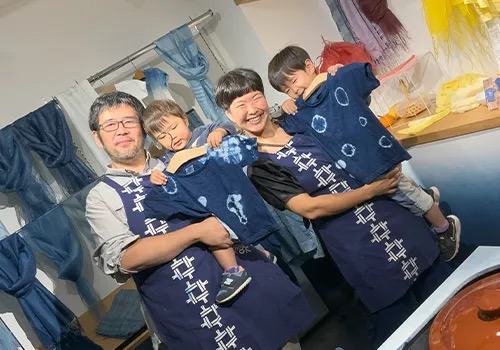
A family in indigo-dyed aprons and tops holds up their dyed work Photo: Mizuno Senkojo
No. 004-3Group class

Mizuno Dye Factory, Hibiya OKUROJI

30 to 90 minutes · Weekends 13:00, 15:00, 17:00 · Hibiya OKUROJI, under the tracks · Booked on the studio's own site

The shop of a dye works founded in 1907 whose head office is in Asahikawa, Hokkaido. It makes hanten jackets, noren curtains and tenugui to order, and on weekends runs indigo sessions in its shop in Hibiya OKUROJI, a row of shops under the railway arches between Yurakucho and Shimbashi. It is the most central workshop on this page. A sekka shibori tenugui is 4,400 yen including the cloth; a T-shirt or cotton stole is 9,900 yen and a hoodie 15,400 yen. Things you bring are priced by weight, 66 yen a gram with a flat 6,600 yen up to 100 g; wash them first, without softener. Sessions over 5,000 yen are tax-free if you show your passport. The listing doesn't say whether the indigo is natural, and its English and Japanese pages disagree on how long it takes. A Time Out page gives different start times and prices from the studio's own; we used the studio's.

Reviewers liked: Not stated. The studio's site shows no reviews for the dyeing session.

Reviewers didn't: Not stated.

No review summary. The studio's booking page shows no reviews.

Pick it if you want to dye a towel or a T-shirt in central Tokyo on a weekend, or bring a piece of your own clothing to dye.

Skip it if you want to know the indigo is natural, or you want a longer lesson. The dyeing part is short.

From ¥4,400 per person · checked 11 Nov 2026 See on the studio's site
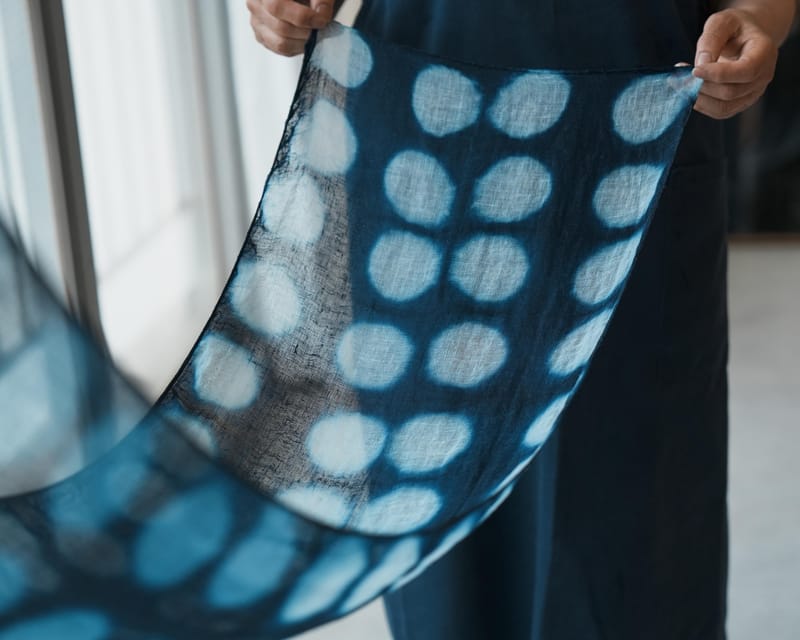
Hands hold up an indigo-dyed scarf with pale circle patterns Photo: GetYourGuide
No. 004-4Small group

Maito Design Works studio

1.5 hours · Up to 6 people · Misuji, Asakusa area · Listed on GetYourGuide as "Japanese Traditional Indigo Dyeing Workshop"

A class in the working studio of the company that runs it, Maito Design Works, in Misuji, a quiet district a 5 to 7-minute walk from Shin-Okachimachi station. It starts with a short studio tour and a talk on indigo in Tokyo, then 60 to 90 minutes of dyeing with shibori and gradient techniques in natural fermentation vats, then rinsing and drying. One item is included: a scarf, a furoshiki or a T-shirt in Japanese sizes S to XL. Other sizes cost 1,000 yen more, and premium scarves and extra pieces are charged on site; the listing gives no prices for those. There are stairs at the entrance, and staff can help lift a wheelchair if you ask ahead.

Reviewers liked: Instructors who explain the history of indigo in Japan and some of the chemistry, and a wide choice of fabrics and patterns. Reviewers like being in a real working studio in a neighborhood with few tourists.

Reviewers didn't: No recurring complaint in the reviews we read.

Summarized from reviews on GetYourGuide (5.0 from 31).

Pick it if you want a small class in natural indigo inside the city, with a scarf or T-shirt rather than a handkerchief.

Skip it if you want the cheapest session, or you want a larger item without extra charges you can't see in advance.

From €68 per person · checked 11 Nov 2026 See on GetYourGuide
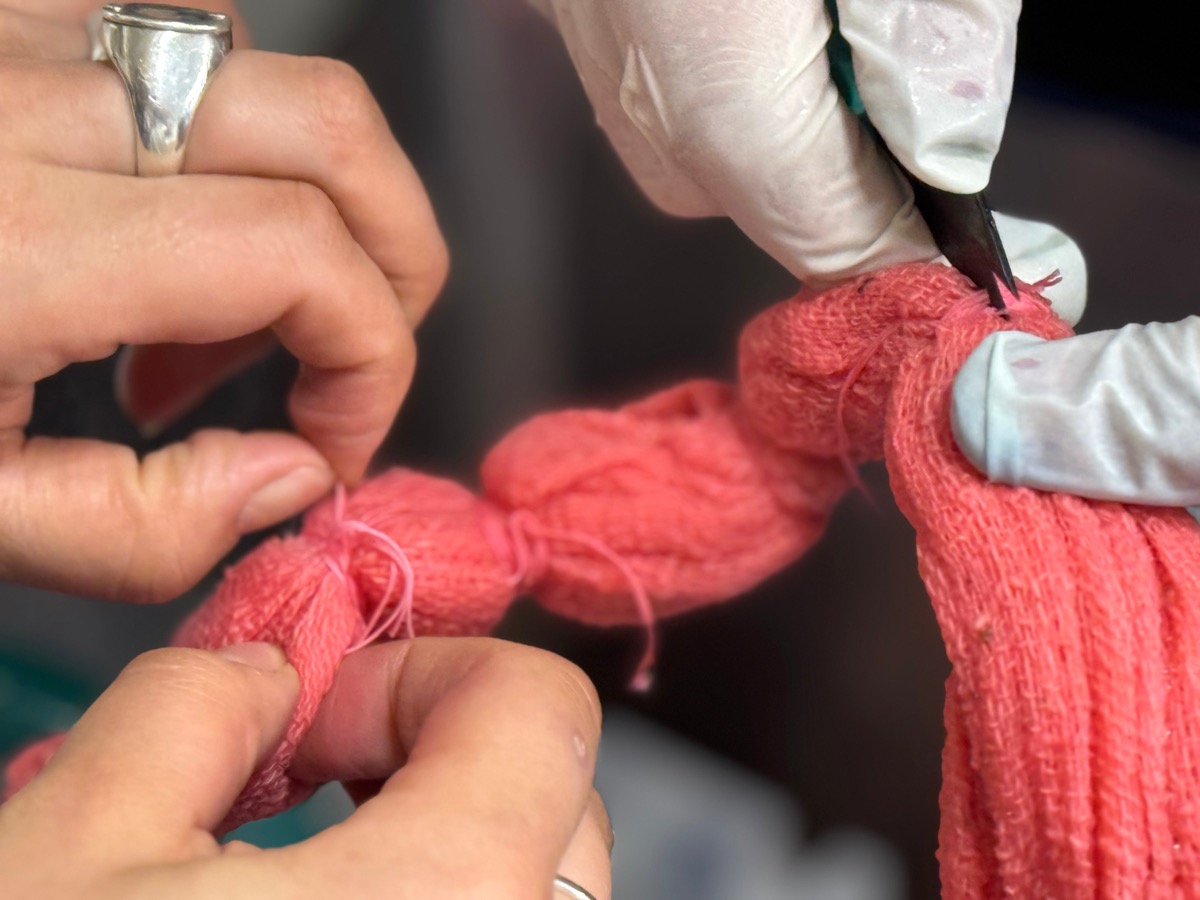
Hands bind a length of pink cloth with thread for shibori dyeing Photo: Aikuma
No. 004-5Private

Aikuma Shibori workshop

3 hours · Private · Kaminarimon, Asakusa · Interpreter included · Booked on the studio's own site

A private lesson at the Asakusa studio of Aikuma, a Japanese dye company, taught by Sae Kaneko, a textile designer who studied in Japan and Germany. It is the only class on this page that teaches technique rather than one quick pattern: 40 minutes of history and demonstration, 100 minutes practicing three shibori methods and binding your own design, then an hour of dyeing and feedback. The price is 17,000 yen per person including tax, materials and an interpreter, but a party of one or two pays 51,000 yen. Groups of five or more get 15 to 40% off, and you save 5,000 yen if you don't need the interpreter. You make a request through a Google Form at least three weeks before your trip, and the page warns that bookings for one or two people may be canceled. The other courses here use indigo in stencil and paste-resist work; we did not price them.

Reviewers liked: Not stated. The studio's site shows no reviews for this workshop.

Reviewers didn't: Not stated.

No review summary. The studio's site shows no reviews.

Pick it if you want to actually learn shibori from a textile artist, privately, and your group has three or more people.

Skip it if you are one or two people on a budget, or you plan last-minute. It costs 51,000 yen for a pair and needs three weeks' notice.

From ¥17,000 per person · checked 11 Nov 2026 See on the studio's site